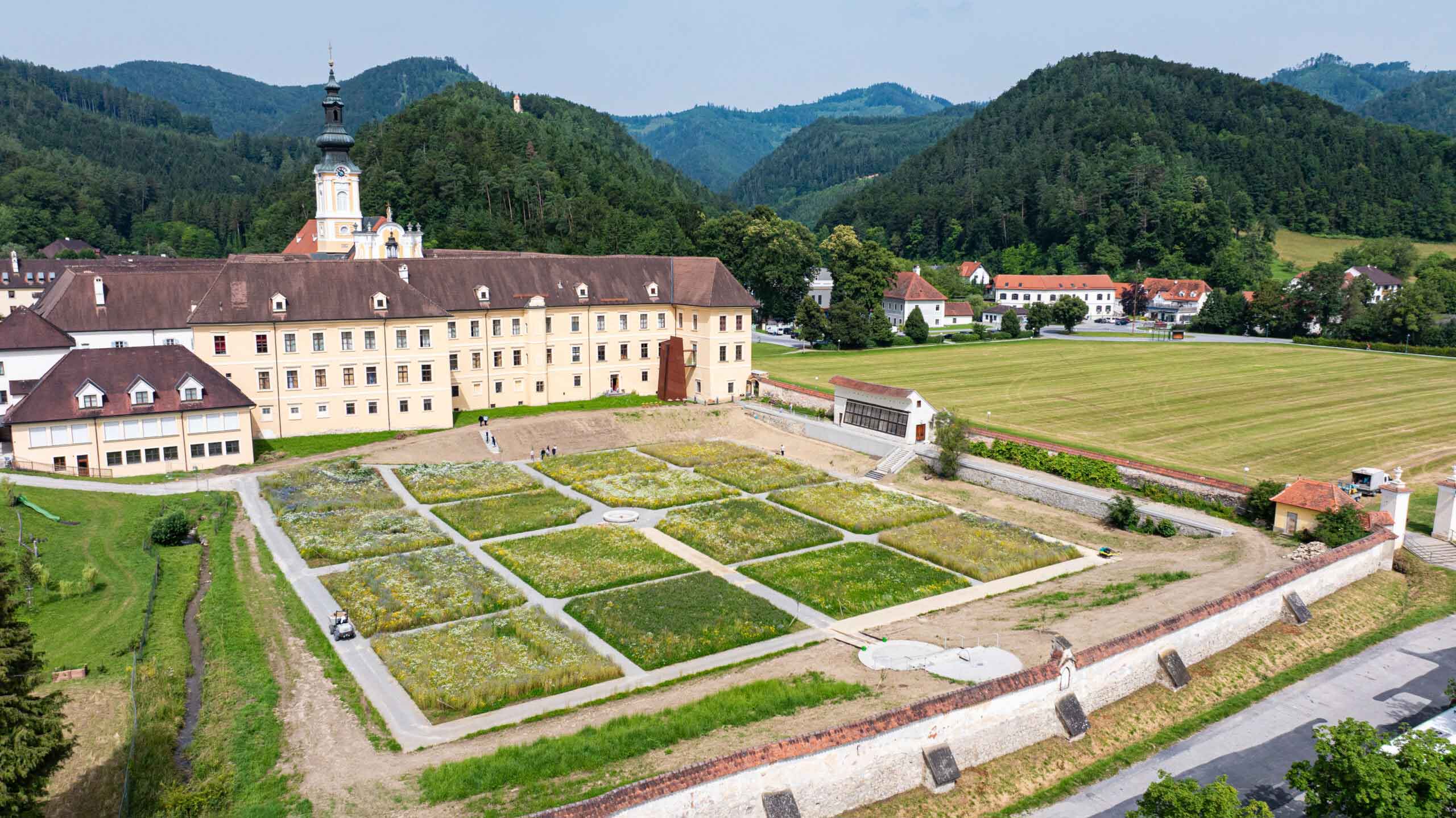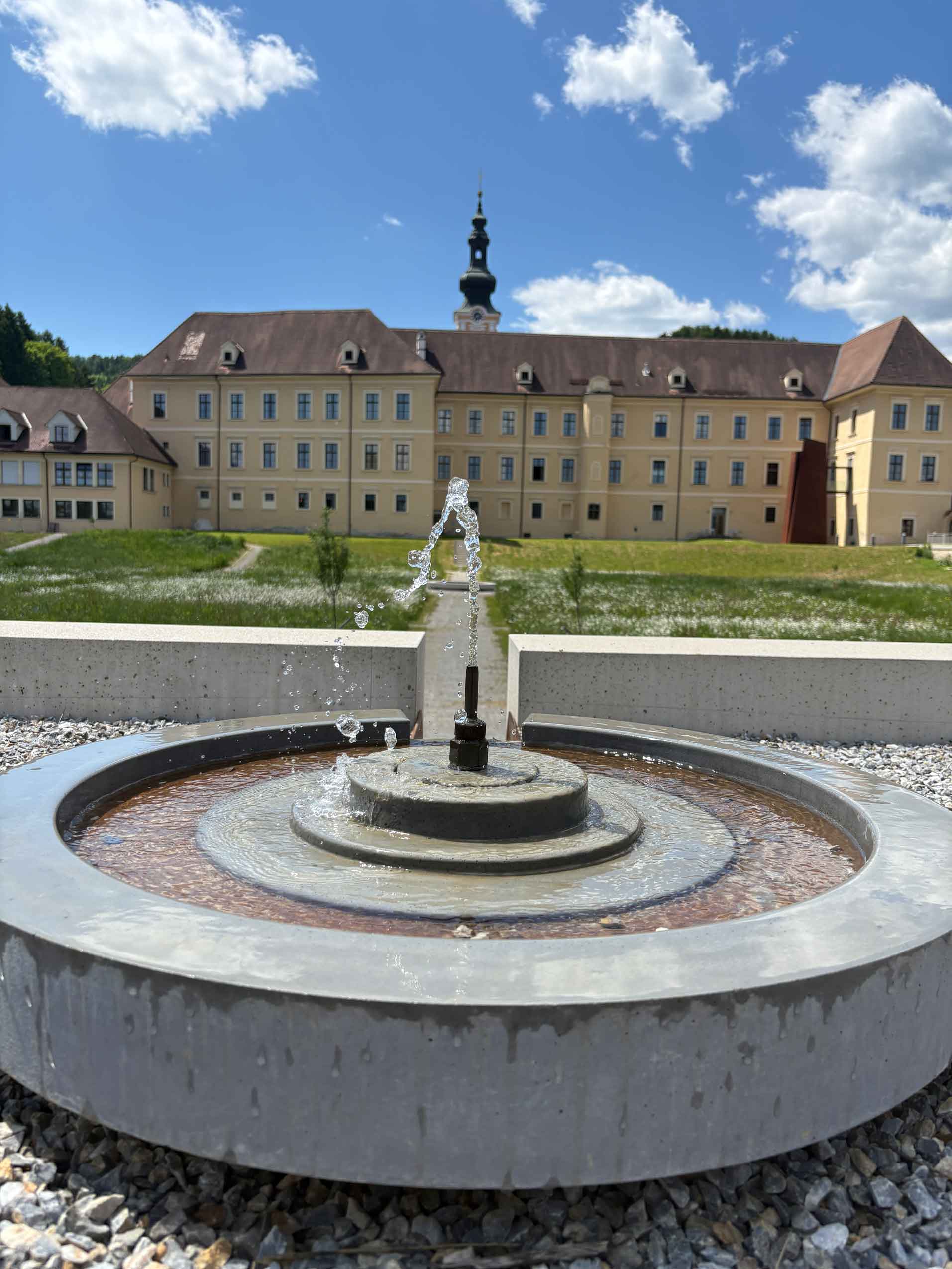
The monastery garden has been revitalized since autumn 2023, and will be open to the public again from June 2025. A special combination of baroque structure and natural planting has been created on around 7,000 square meters. The old historical outlines have been exposed true to the original, and the baroque structures, the network of paths, the fountain system and the nymphaeum have been carefully restored.
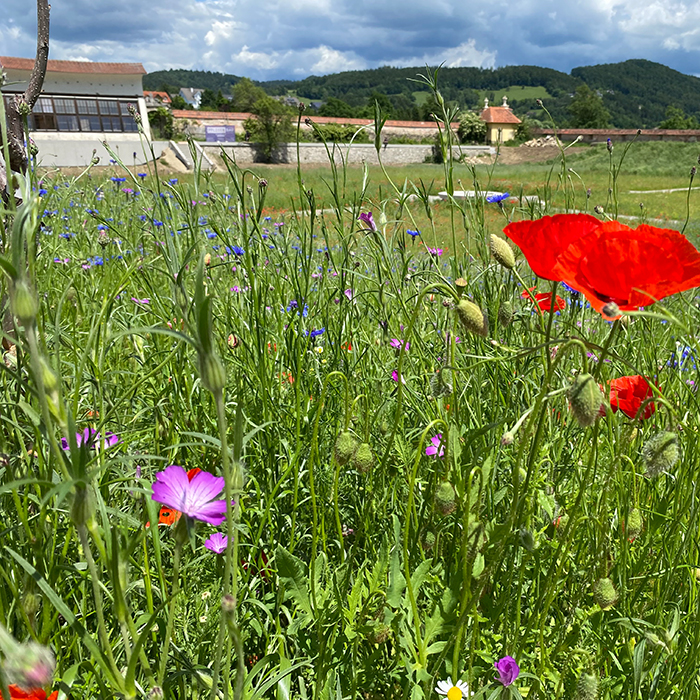
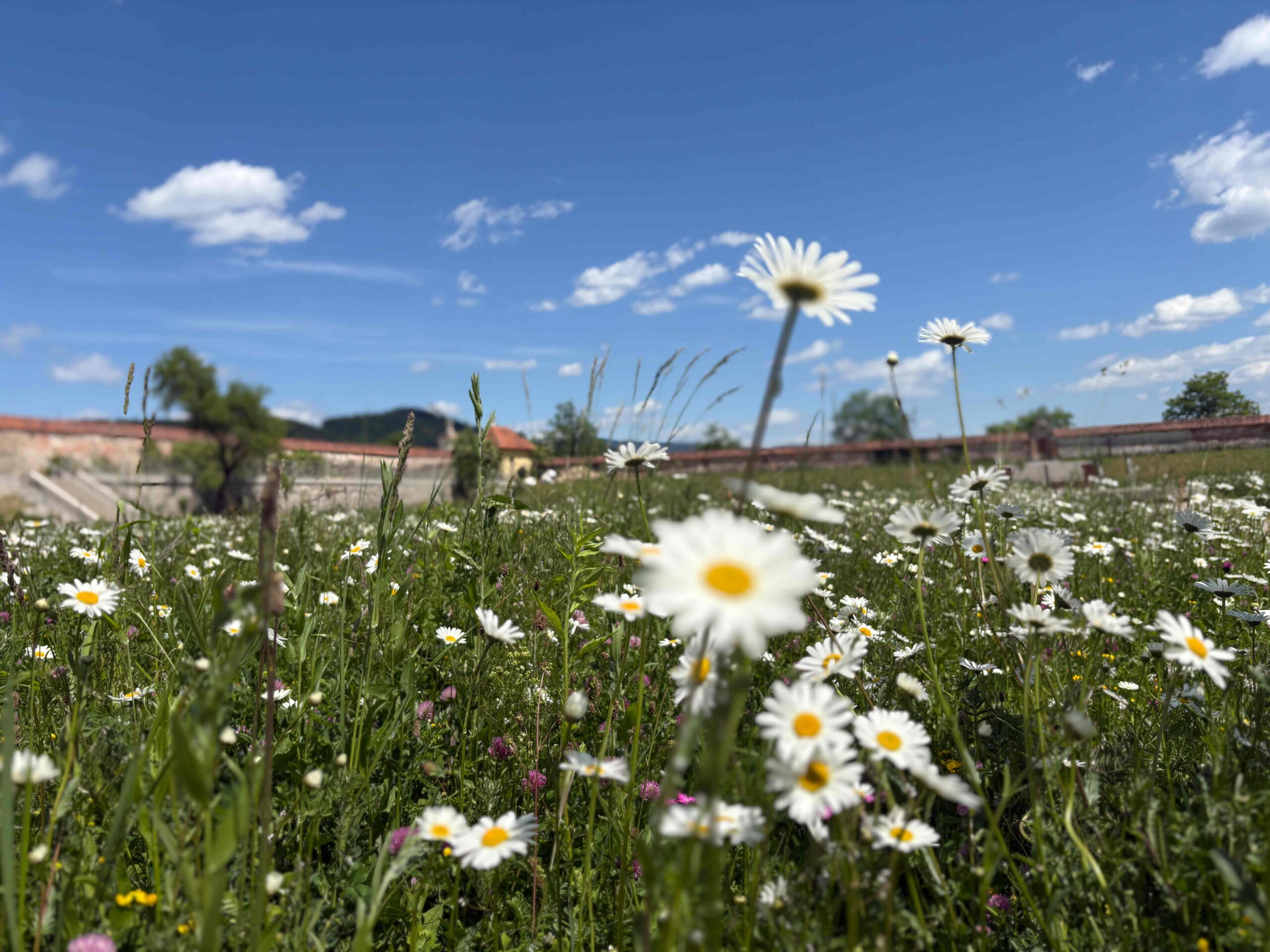
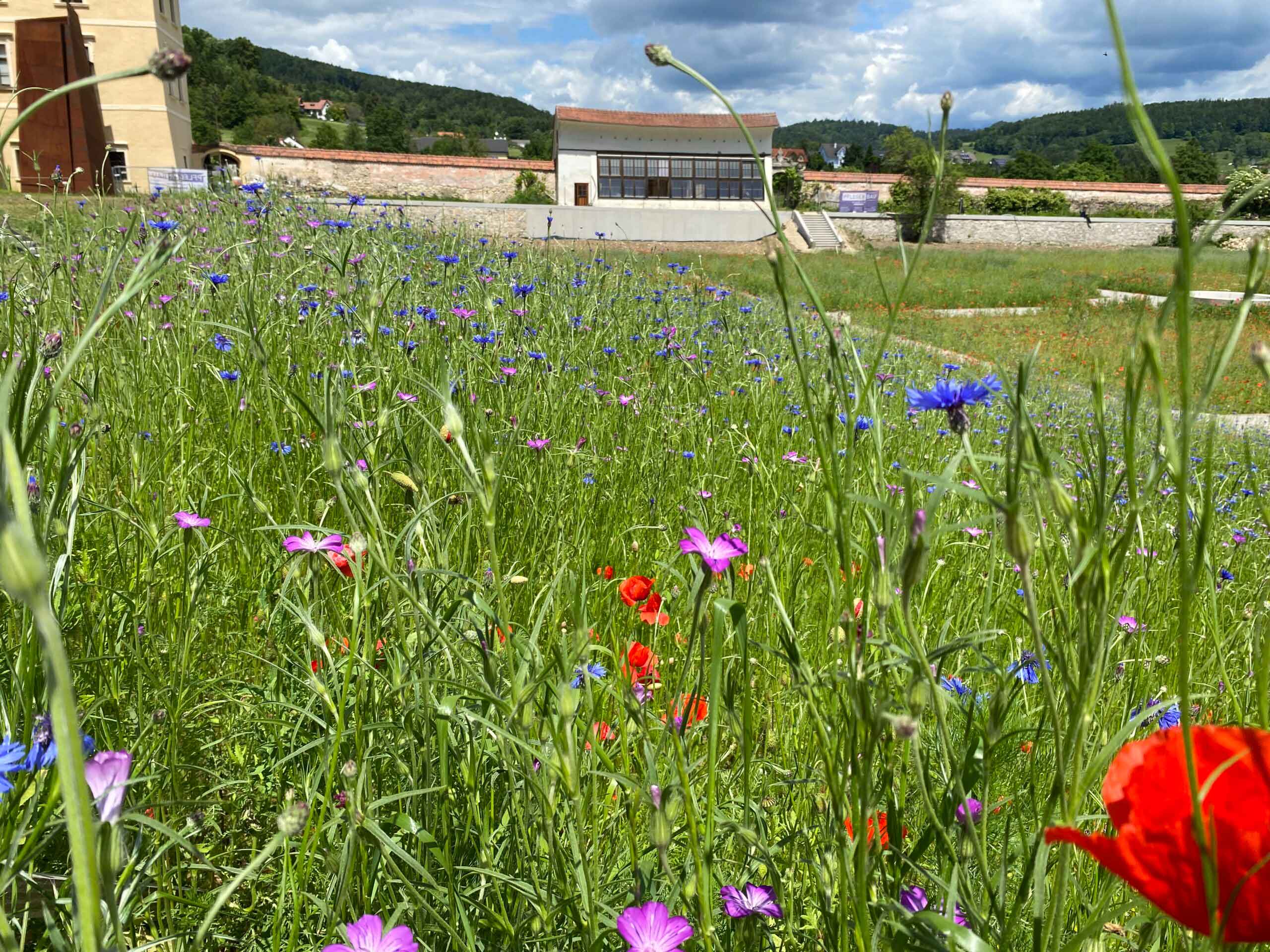
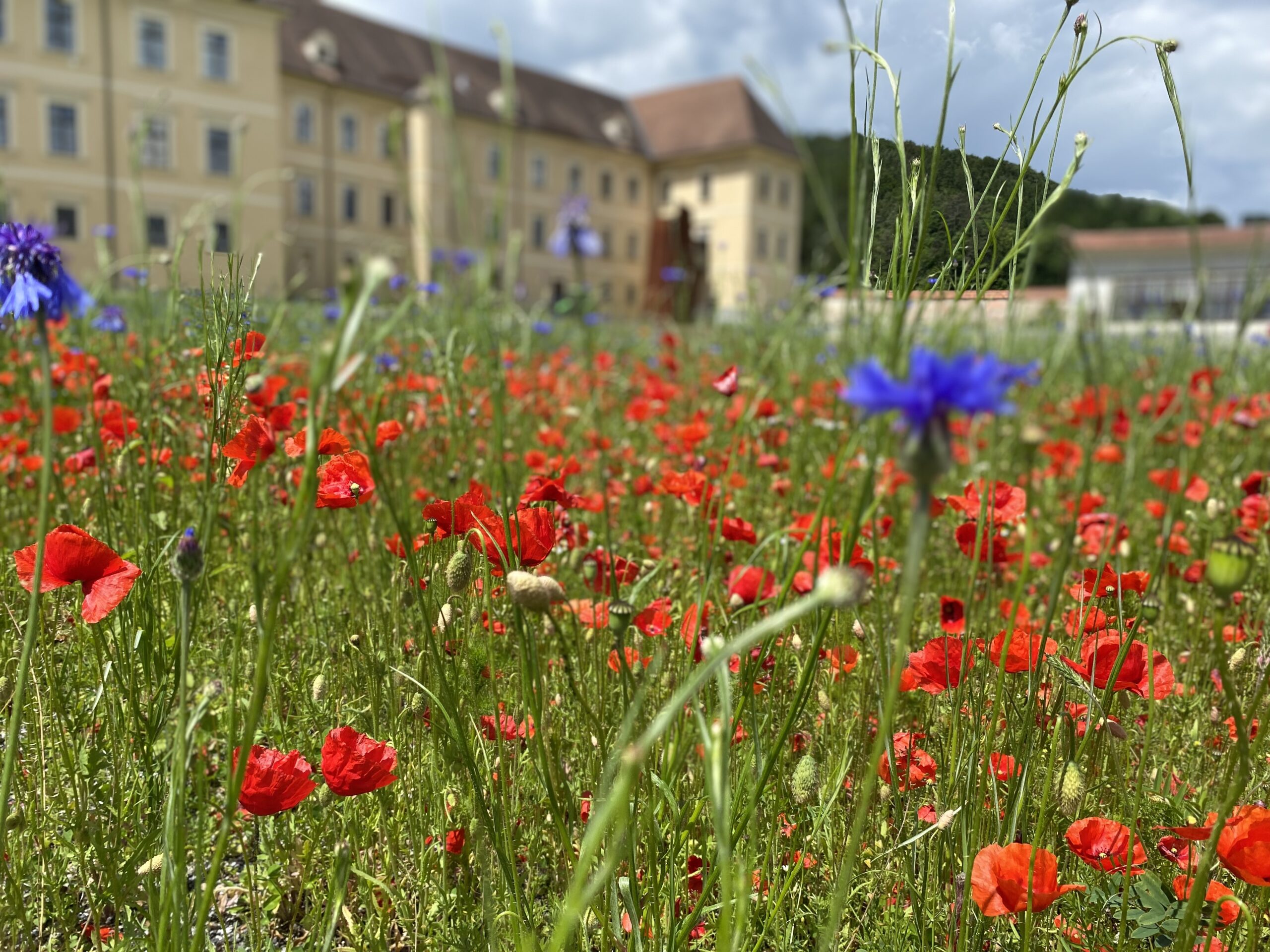
However, the opulent floral splendor of the Baroque is sought in vain here. This is because the planting follows an innovative approach. Instead of relying on classic ornamental gardens, wildflower meadows with native species such as poppy and cornflowers, daisies, dyer’s chamomile and purple loosestrife grow here. Three areas — rich meadow, lean meadow and annual flowering areas — ensure variety and change throughout the year.
The Blühen & Summen association has implemented the planting and also takes care of the garden. The complex is complemented by fruit trees, a herb garden, perennial beds, a sandarium as a breeding ground for wild bees and lots of roses. All plant species are deliberately chosen — all can also be found in the Bible.
The result is unique in Austria — the first ecological-biological baroque garden. A special place that preserves the historical structure but brings nature and culture into harmony with each other.
Of course, the garden is far from finished. The structures have been created and the seeds have been sown. Now it is up to nature to take effect. And the first signs of life are already returning: a family of hares has settled, toads are colonizing the garden and there is already a lot of buzzing and humming on the meadow squares.
The garden is freely accessible to visitors every Sunday from June 15 between 10 a.m. and 4 p.m., at which time the operating association Blühen & Summen will also be on site. Special tours “The monastery garden and its significance” will take place on July 12, August 2 and 23. The monastery garden will also be shown in our daily tours at 10:30 a.m. and 1:30 p.m. (groups only by prior arrangement).
However, the opulent floral splendor of the Baroque is sought in vain here. This is because the planting follows an innovative approach. Instead of relying on classic ornamental gardens, wildflower meadows with native species such as poppy and cornflowers, daisies, dyer’s chamomile and purple loosestrife grow here. Three areas — rich meadow, lean meadow and annual flowering areas — ensure variety and change throughout the year.
The Blühen & Summen association has implemented the planting and also takes care of the garden. The complex is complemented by fruit trees, a herb garden, perennial beds, a sandarium as a breeding ground for wild bees and lots of roses. All plant species are deliberately chosen — all can also be found in the Bible.
The result is unique in Austria — the first ecological-biological baroque garden. A special place that preserves the historical structure but brings nature and culture into harmony with each other.
Of course, the garden is far from finished. The structures have been created and the seeds have been sown. Now it is up to nature to take effect. And the first signs of life are already returning: a family of hares has settled, toads are colonizing the garden and there is already a lot of buzzing and humming on the meadow squares.
The garden is freely accessible to visitors every Sunday from June 15 between 10 a.m. and 4 p.m., at which time the operating association Blühen & Summen will also be on site. Special tours “The monastery garden and its significance” will take place on July 12, August 2 and 23. The monastery garden will also be shown in our daily tours at 10:30 a.m. and 1:30 p.m. (groups only by prior arrangement).