
Our Monastery Garden
“Since all creatures are interconnected,
each must be cherished with love and admiration,
and we are all dependent on one another.”
Pope Francis,
Encyclical LAUDATO SI
The Cistercian Gardens
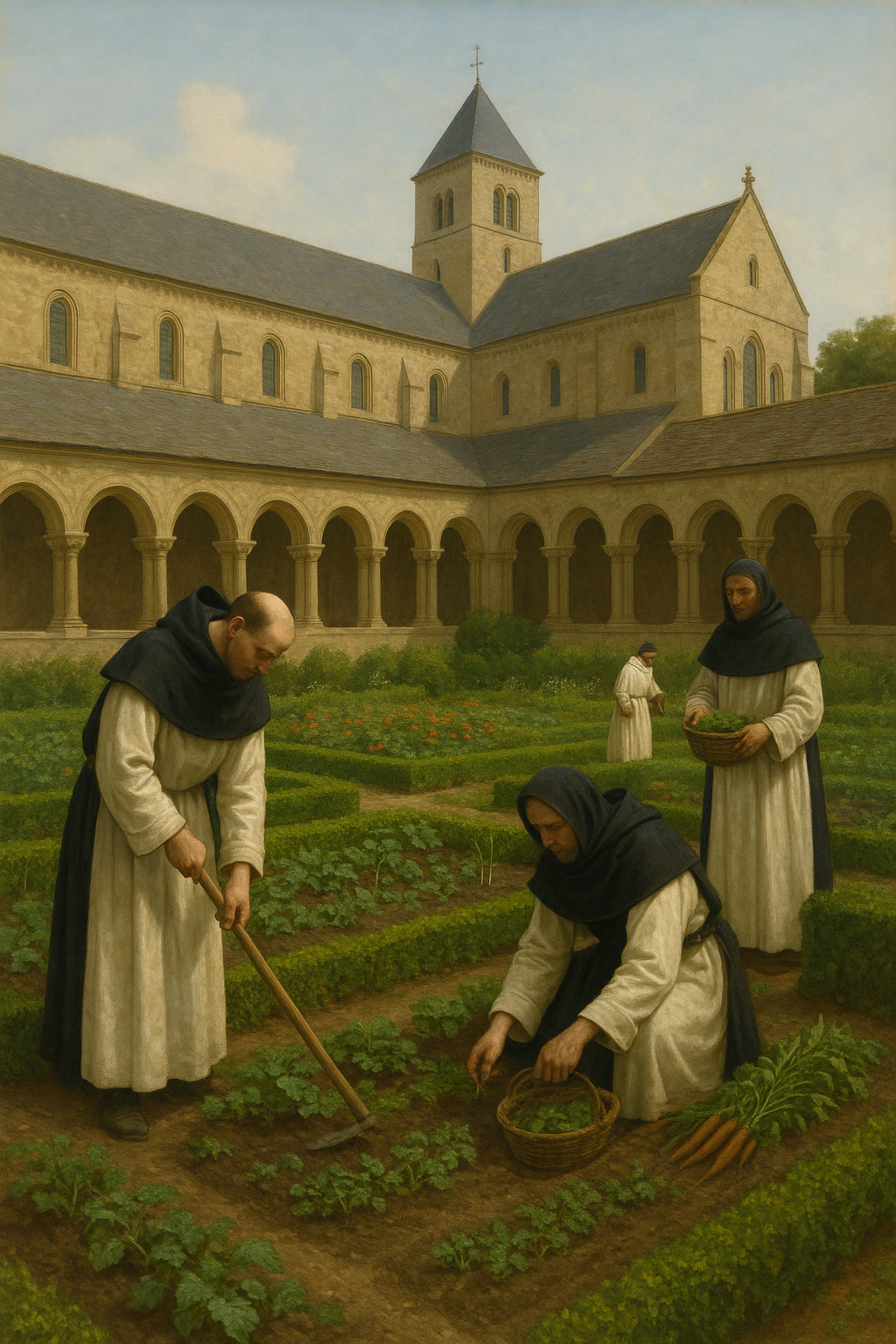
Since the beginnings of monasticism, gardens have been an integral part of monastic life. They were a source of sustenance, a place of retreat, and a reflection of spiritual life. The Cistercians also cultivated their gardens as places of work, healing, and prayer. Here, fruits, vegetables, and medicinal herbs grew, providing food and medicine for the community.
In the spirit of the Benedictine motto ora et labora – “pray and work” – the garden connected the two poles of monastic life: physical labor and spiritual contemplation. Initially purely utilitarian gardens, they evolved over the centuries into quiet refuges for contemplation. Only in the Baroque era did many of these simple, functional layouts transform into magnificent gardens reminiscent of princely palace parks – a symbol of a new epoch of faith and aesthetics.
From Utilitarian Garden to Total Work of Art
The Cistercians are considered great cultivators of the European landscape, yet little is known about their early gardening practices. What is certain is that medieval gardens primarily served self-sufficiency and healing. The garden was a provider of food, an apothecary, and a place of quiet contemplation – not a place of idleness, but of life in harmony with creation.
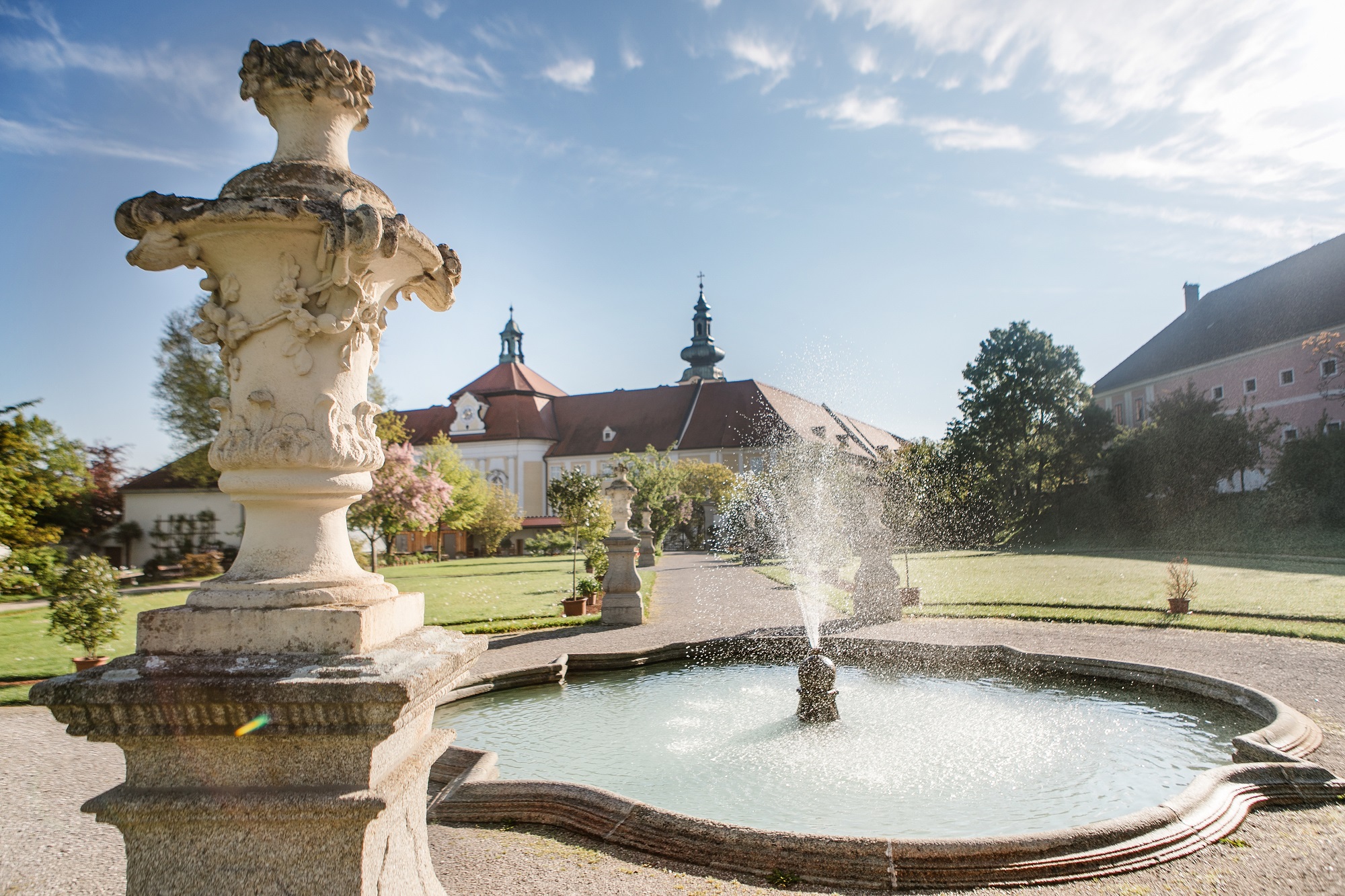
With the Baroque era, monastic garden culture reached its peak. Prelate gardens emerged, richly adorned with sculptures, fountains, and ornaments – as can still be seen today in Seitenstetten Abbey. The architecture of the garden mirrored the order of the cosmos – symmetrical, clear, permeated by divine harmony. However, many of these complexes fell into disrepair in the 19th century or were converted into agricultural land. Only today, in an era of new ecological sensitivity, are monasteries rediscovering the spiritual power of the garden – as a living place between tradition and future.
The Rein Abbey Garden Through Time
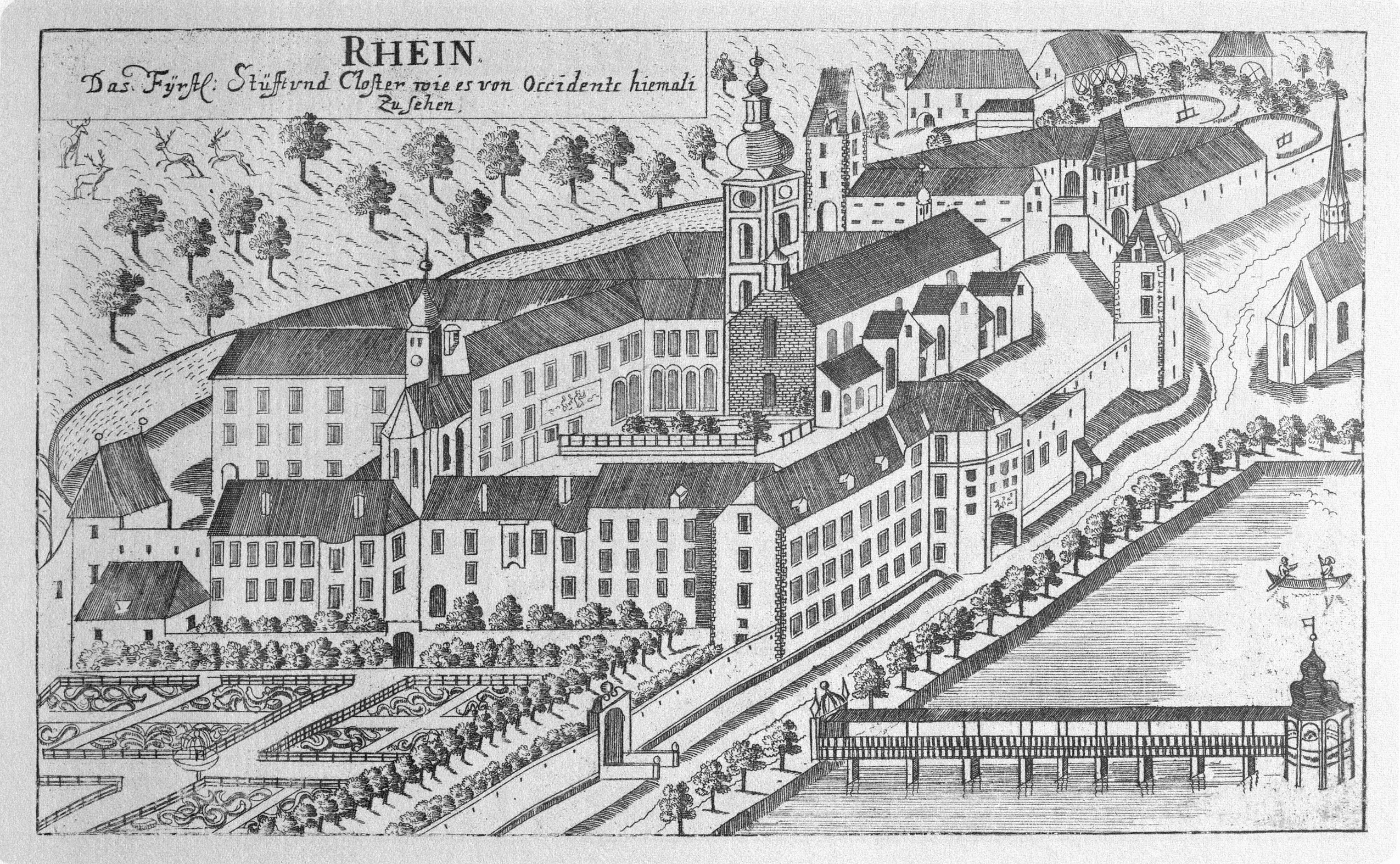
Rein Abbey also looks back on a long horticultural history. As early as the 17th century, a Baroque garden was laid out here following the French model – a symmetrical design with boxwood ornaments, fountains, and a large reflecting pond that mirrored the monastery.
Over the centuries, the garden changed repeatedly. The elaborate Baroque broderies became a flourishing utilitarian garden with an orangery and a cottage garden in the 19th century. The large fountain remained a central symbol throughout time – an indication of the garden’s paradisiacal origin.
However, like many other places, the Rein Abbey Garden increasingly fell into disrepair in the 20th century. The once magnificent complex became wasteland. Only since 2024 has it blossomed anew – in a new, unusual form.


Austria’s first
“wild baroque garden”
In recent years, an extraordinary project has been realized here: the revitalization of the Abbey Garden as Austria’s first “wild Baroque garden”.
The concept combines the strict geometry of Baroque garden architecture with the untamed diversity of native wild plants. Where once precisely trimmed beds dominated, species-rich wildflower meadows now spread across an area of 7,000 square meters. The design follows the historical basic structure, but the life within belongs to the “six-legged creatures”: bees, butterflies, and countless other insects.
Together with the association Blühen & Summen (Blooming & Buzzing), a holistic ecological concept was developed, focusing on sustainability, biodiversity, and gentle management.
Three-quarters of the area consists of native wildflower meadows with origin-certified wild plants. They are gently maintained, mowed in sections, and provide habitat for insects, amphibians, and small mammals.
Herb and cottage gardens with hyssop, sage, marigold, milk thistle, and old Styrian fruit varieties complement the ensemble. Reptile biotopes, sandariums for wild bees, water features, and a willow gallery create diverse habitats.


