
Pilgrimage

THE JOURNEY IS THE DESTINATION
“I rejoiced when they said to me, ‘Let us go to the house of the Lord.’ ” (Psalm 122:1)
Pilgrimage and pilgrimage tradition are closely linked to Rein Abbey. Shortly after the monastery was founded, the Cistercians were also entrusted with the care of the Maria Strassengel sanctuary (1129/1155). In the centuries-old tradition, pilgrimages are enjoying renewed popularity today
Pilgrimage to Rein Abbey: Rein Key of Grace
A directive from Pope Sixtus in 1479 allowed the abbey church, which was otherwise closed to the public, to be opened on White Sunday. In earlier times, the church was only available to the monks, while the public service was held in the Georgikapelle, which no longer exists today, in front of the abbey gate (where the war memorial stands today). And the faithful did not miss this opportunity. In remembrance and as a gift of grace, small keys were minted and attached to the rosary. The reputation of the keys of grace went far beyond the region. They are still available today in the monastery shop of the abbey.
On “White Sunday”, the Sunday after Easter, this holiday is celebrated in the abbey with a solemn service, meetings of the surrounding parishes and a church fair.

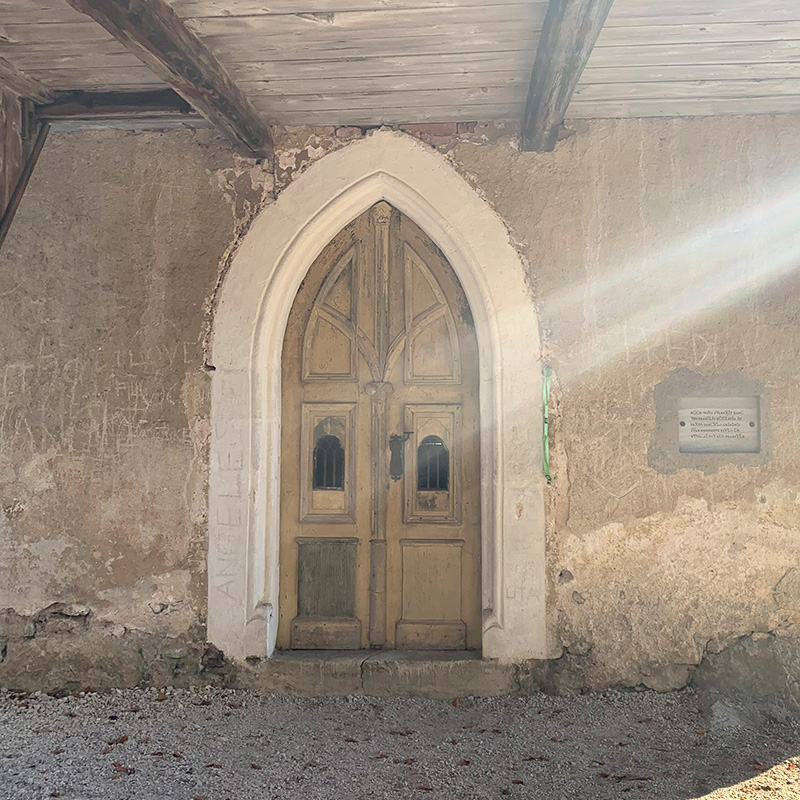
Rein Abbey: Ulrich’s CHURCH
In 1453, the so-called Ulrichskirche was consecrated on a hill above Rein Abbey by the papal legate Aeneas Silvio Piccolomini (later Pope Pius II). To this day, it is a popular excursion and pilgrimage destination not far from the abbey.
Pilgrimage Church Maria Straßengel: Madonna in a Garment of Grain
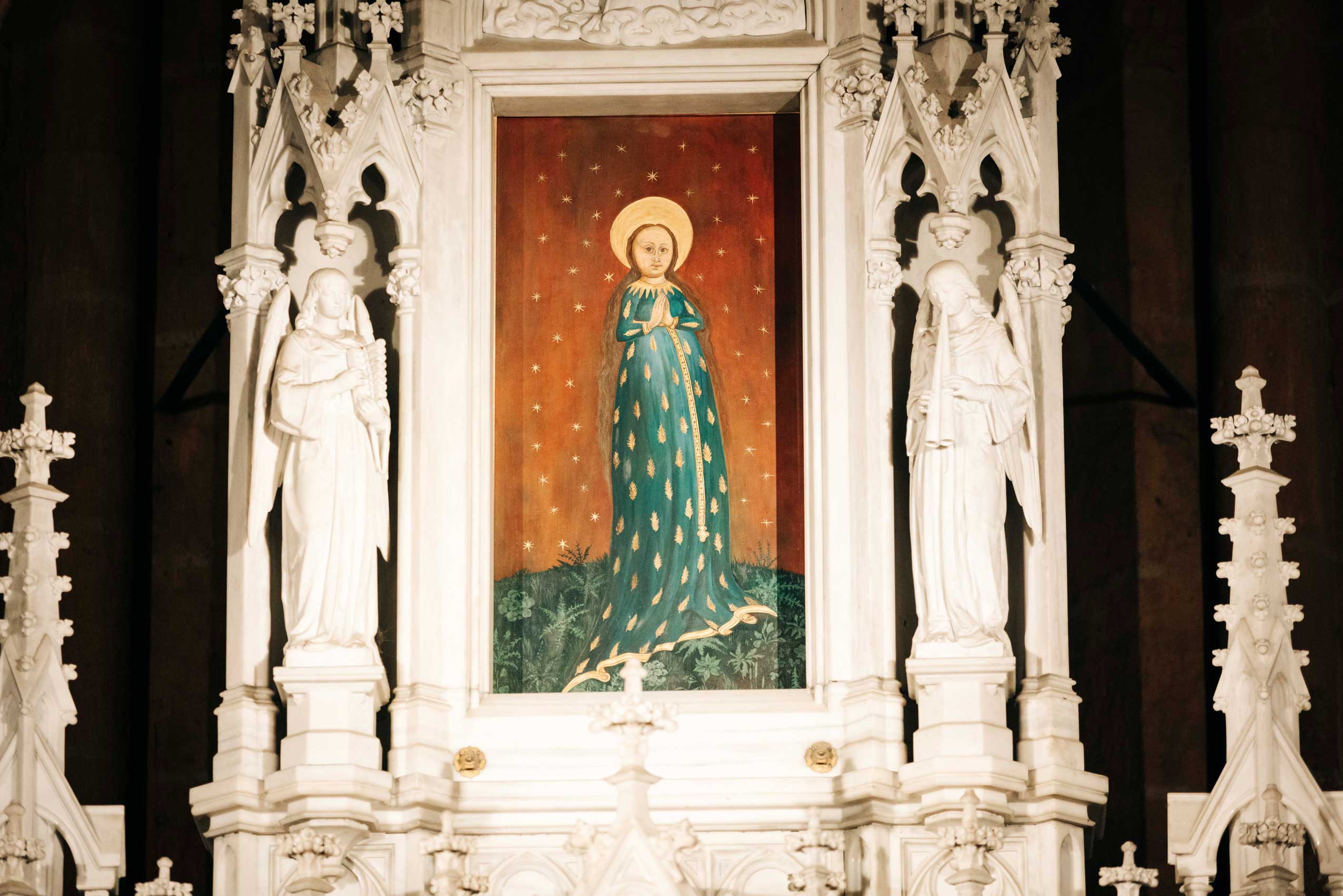
Legend has it that Margrave Ottokar brought the image of Mary venerated in Straßengel from a crusade in Jerusalem. The image currently venerated shows Mary as a girl in a long, blue dress embroidered with golden ears of grain, held together by a golden belt. Her long, blonde hair is loose. She stands on a flower meadow. The background is a rust-brown, star-covered sky. The depiction is called “Madonna in a Garment of Grain”. The miraculous image, which now has its place on the high altar, is a copy of the image from the 14th/15th century, which was stolen from the church in 1976 and was made by the artist Gottfried Höfler.
Maria Straßengel Pilgrimage Church: ROOT CROSS
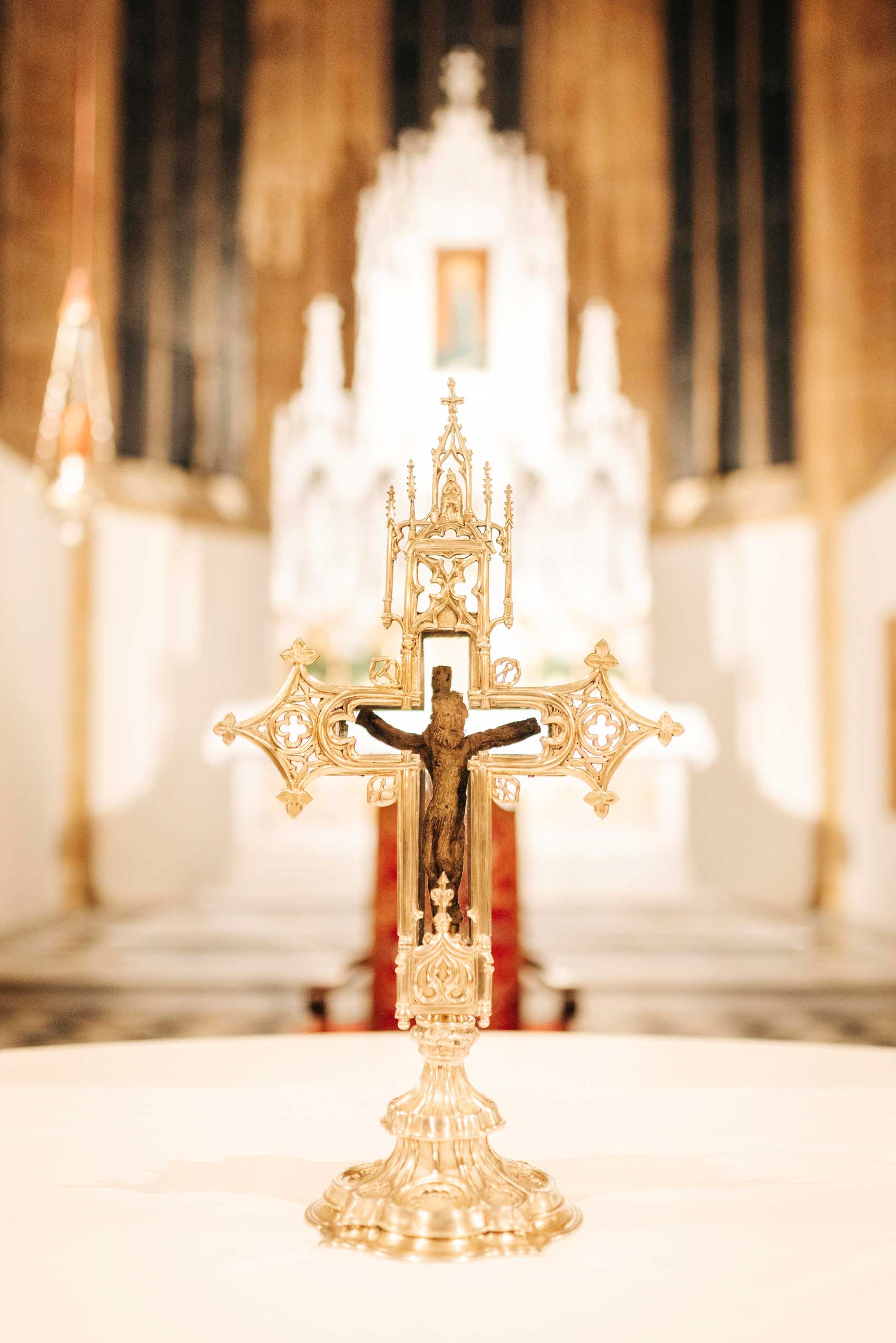
A chronicle of Rein Abbey from the 14th century reports that a shepherd guarded his cattle near the Chapel of Grace around the year 1255. When the animals showed unusual restlessness under a fir tree, he investigated and found the image of the Crucified One growing out of a root: the head with an open mouth, head and beard hair made of fine root fibers and a structured body with arms stretched out for crucifixion and crossed feet were clearly recognizable. The shepherd reported his find to the Abbot of Rein, who in turn informed the Archbishop of Salzburg. He went to Rein. In his and the abbot’s presence, with many people as spectators, the image was detached from the root and transferred to the church. This find was soon regarded as a miraculous event and has been venerated ever since.
After the root cross also fell victim to theft in 1976, but was miraculously returned, it can only be visited today by appointment or after the services.